2026 Toyota Camry Review: The Mid-Size Efficiency King Goes All-In on Hybrid
| Pros | Cons |
|---|---|
|
|
Verdict The 2026 Camry has evolved from a boring commuter into a tech-forward, high-efficiency powerhouse. While the Civic wins on ‘fun,’ the Camry is the undisputed champion for those who prioritize AWD confidence and long-distance comfort. | |
The 2026 Toyota Camry enters its second year of the 9th-generation redesign, doubling down on the “Hybrid-only” strategy that shocked the segment. By ditching the pure gas engines and the old V6, Toyota has created a sedan that is remarkably consistent, efficient, and—dare we say—stylish.
Powertrains, Performance and Driving Feel
Toyota’s 5th-generation Hybrid System (THS 5) is the star of the show here. Unlike the Civic, which remains FWD, the Camry offers an electric motor on the rear axle to give you AWD without a physical driveshaft.
- FWD Powertrain: 2.5L 4-Cylinder + Electric Motors producing 225 hp.
- AWD Powertrain: Adds a third rear-mounted motor, bumping output to 232 hp.
- Efficiency: The SE FWD leads the pack at an incredible 4.9 L/100km combined, while AWD models hover around 5.1 L/100km.
On the road, the eCVT has been tuned to avoid the “rubber band” drone of older hybrids. The transition between gas and electric is nearly seamless. In our Canadian winter testing, the AWD system engaged instantly on slushy ramps, providing a level of confidence the FWD-only Civic simply can’t match. 0-100km/h arrives in about 7 seconds - not a sports car, but plenty for the 401.
Design Refresh
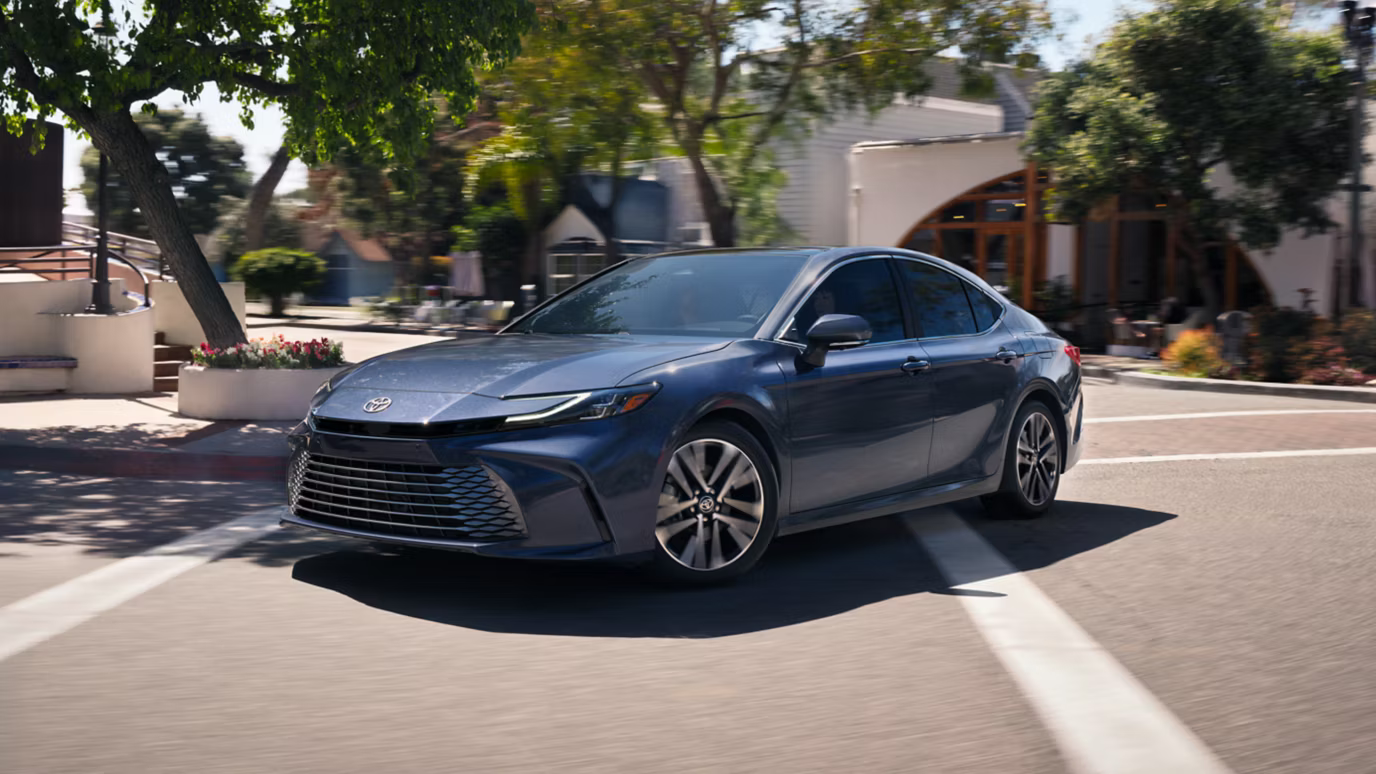
The “Hammerhead” front-end design gives the Camry a mini-Prius look that works surprisingly well on a larger body.
- Trim Personalities: The SE and XSE get the sporty mesh grilles and functional air curtains, while the XLE goes for a more “luxury-lite” vibe with chrome accents.
- Nightshade Edition: New for 2026, this trim adds 19-inch black wheels and blacked-out badges for those who want to lose the “rental car” stigma.
Interior & Technology
The cabin is a major step up from previous years. It feels wider and more substantial than the Civic.
- Space: You get 428 Litres of trunk space. It’s deep, but the sedan opening is tighter than the Civic’s available hatchback.
- Screens: Base SE models get an 8-inch screen, but the XLE and XSE boast a massive 12.3-inch display that looks much more modern than the Civic’s top-tier 9-inch unit.
- Tech Features: Toyota Safety Sense 3.0 is standard, and we were particularly impressed by the available Traffic Jam Assist, which handles the heavy lifting in stop-and-go GTA traffic.
Pricing (before taxes) and which trim to buy
As of today, Canadian pricing (including Freight/PDI) looks like this:
- SE (FWD) – $37,035
- SE Upgrade (AWD) – $40,730
- XSE (AWD) – $47,791
- XLE (AWD) – $47,686
Which trim to buy? The SE Upgrade (AWD) is the “sweet spot” for Canadians. It gives you the AWD security, the sunroof, and the wireless charger without crossing the $45k barrier. If you don’t care about AWD and just want the best MPG, the base SE is an incredible value. Skip the XSE unless you absolutely need the leather seats and the head-up display.